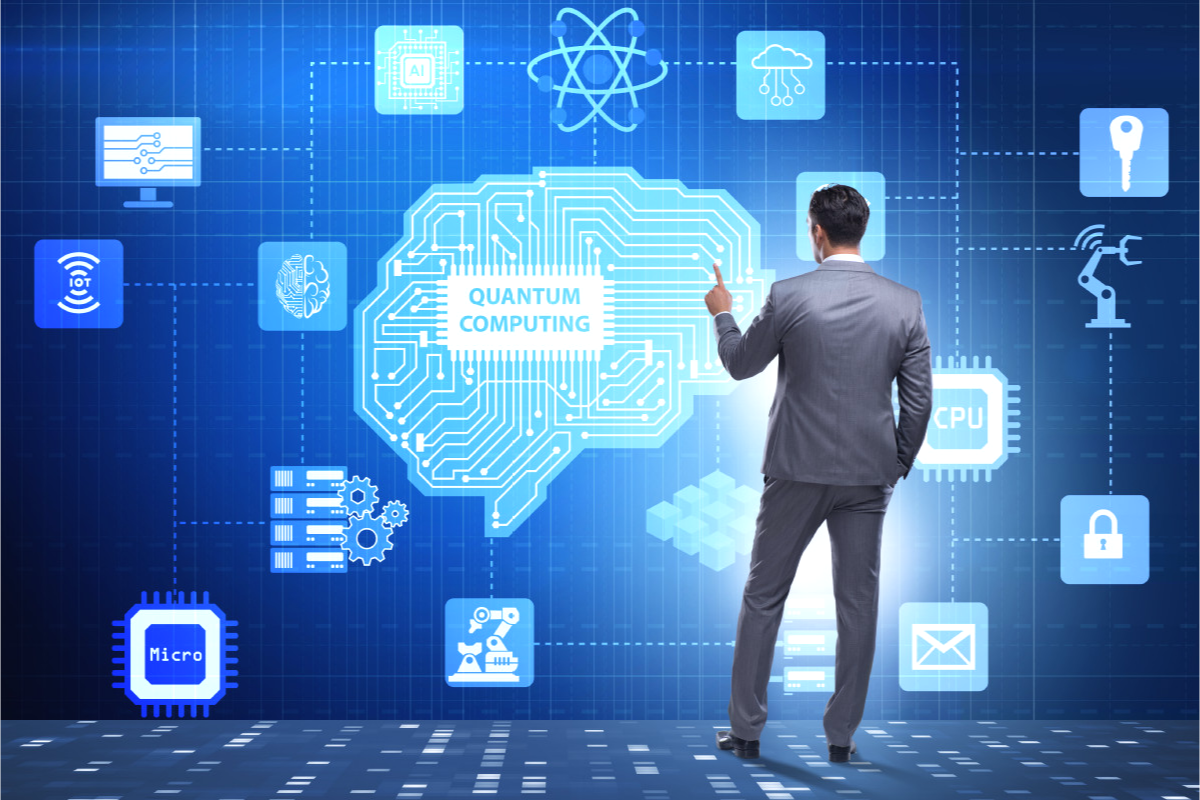

Quantum computing is one of the most revolutionary advancements in modern technology, promising to transform industries from medicine to cryptography. Unlike classical computers that rely on bits, quantum computers use quantum bits, or qubits, to perform calculations at unprecedented speeds. This innovation has sparked both excitement and curiosity, as it challenges our understanding of computation itself. As researchers and tech giants invest heavily in this field, the question arises: what exactly is quantum computing, and why does it matter?
Understanding quantum computing begins with recognizing its potential to solve problems that are currently intractable for classical systems. For instance, simulating complex molecules for drug discovery or optimizing large-scale logistics could become far more efficient. Governments and corporations are racing to harness this power, making it crucial for students, professionals, and enthusiasts to grasp the fundamentals. By demystifying quantum computing, we can better appreciate its implications and prepare for a future where quantum technology plays a central role.
Introduction & Background
Quantum computing represents a paradigm shift in how we process information. Traditional computers, which have powered the digital age for decades, operate using binary logic. Each bit can be either a 0 or a 1, forming the foundation of all modern computing. However, as problems grow increasingly complex, classical systems face limitations in terms of speed and efficiency.
The concept of quantum computing emerged from the principles of quantum mechanics, a branch of physics that describes the behavior of matter and energy at the smallest scales. Pioneers like Richard Feynman and David Deutsch laid the groundwork in the 1980s, theorizing that quantum systems could simulate nature more accurately than classical computers. Today, companies like IBM, Google, and Rigetti are building functional quantum computers, signaling a new era of technological evolution.
The significance of quantum computing lies in its ability to tackle problems that are beyond the reach of classical machines. For example, breaking widely used encryption methods or modeling molecular interactions for new materials could revolutionize entire industries. As the technology matures, it has the potential to redefine what is possible in science, engineering, and beyond.
Concept & Overview
At its core, quantum computing leverages the unique properties of quantum mechanics to perform calculations. While classical computers use bits as the smallest unit of data, quantum computers use qubits. Unlike bits, qubits can exist in a superposition of states, meaning they can be both 0 and 1 simultaneously. This property enables quantum computers to process a vast number of possibilities at once.
Another critical principle is entanglement, where two or more qubits become linked in such a way that the state of one instantly influences the state of the other, no matter the distance between them. This phenomenon allows for highly coordinated and efficient computations. Additionally, quantum computers rely on quantum gates, which are the building blocks of quantum circuits, to manipulate qubits and perform operations.
The power of quantum computing comes from its ability to harness these quantum phenomena to solve complex problems exponentially faster than classical computers in certain scenarios. For example, Shor’s algorithm, which can factor large numbers efficiently, threatens current encryption standards, while Grover’s algorithm offers a quadratic speedup for unstructured search problems. These capabilities underscore why quantum computing is seen as a game-changer.
Key Features & Highlights
- Superposition: Qubits can exist in multiple states at once, allowing quantum computers to process many possibilities simultaneously. This property is fundamental to quantum speedup.
- Entanglement: Qubits can be entangled, meaning the state of one qubit is directly correlated with another, even over large distances. This enables highly efficient and coordinated computations.
- Quantum Interference: Quantum algorithms use interference to amplify correct solutions and cancel out incorrect ones, increasing the likelihood of finding the right answer.
- Quantum Decoherence: Qubits are highly sensitive to their environment, and maintaining their quantum state is challenging. Overcoming decoherence is a major hurdle in building reliable quantum computers.
- Scalability: Current quantum computers have a limited number of qubits, but scaling up to thousands or millions is essential for practical applications. Researchers are exploring various approaches, including superconducting qubits and trapped ions, to achieve this goal.
Frequently Asked Questions / Pros & Cons
What is the difference between classical and quantum computing?
Classical computers use bits as the smallest unit of data, which can be either 0 or 1. They process information sequentially, making them efficient for a wide range of tasks. Quantum computers, on the other hand, use qubits that can exist in a superposition of states, allowing them to process multiple possibilities at once. This enables quantum computers to solve certain problems much faster than classical computers.
What are the main advantages of quantum computing?
- Exponential Speedup: For specific problems, quantum computers can provide exponential speedups compared to classical computers, making them ideal for tasks like factoring large numbers or simulating quantum systems.
- Parallelism: Quantum computers can evaluate many possible solutions simultaneously due to superposition, which is particularly useful for optimization and search problems.
- Quantum Simulation: They can accurately simulate quantum systems, which is invaluable for fields like chemistry, material science, and drug discovery.
What are the challenges associated with quantum computing?
- Decoherence: Qubits are highly sensitive to their environment, and maintaining their quantum state is difficult. This limits the time available for computations and requires advanced error correction techniques.
- Scalability: Building large-scale quantum computers with thousands of stable qubits remains a significant challenge. Current quantum computers have fewer than 100 qubits, and scaling up is non-trivial.
- Error Rates: Quantum computers are prone to errors due to noise and decoherence. Error correction is essential but adds complexity and overhead to quantum systems.
- Accessibility: Quantum computers are expensive and complex to build and maintain. Access to quantum computing resources is currently limited to research institutions and large corporations.
Practical Guidance & Solutions
For those eager to explore quantum computing, there are several actionable steps to take. First, build a foundational understanding of quantum mechanics and linear algebra, as these are essential for grasping quantum computing principles. Online courses, textbooks, and academic papers are excellent resources for learning.
Next, experiment with quantum simulators and programming frameworks. Tools like IBM Quantum Experience, Qiskit, and Google’s Cirq allow users to write and run quantum algorithms on real quantum computers or simulators. These platforms provide hands-on experience without requiring access to expensive hardware.
For professionals looking to apply quantum computing in their fields, focus on problems that benefit from quantum speedup, such as optimization, cryptography, or material science. Collaborate with researchers or join quantum computing communities to stay updated on the latest developments and best practices.
Investing in education and research is also crucial. Universities and organizations worldwide are offering specialized programs in quantum computing. By pursuing these opportunities, individuals can contribute to the advancement of the field and prepare for future career opportunities.
Conclusion
Quantum computing stands at the frontier of technological innovation, offering solutions to problems that have long been out of reach for classical computers. From simulating complex molecules to revolutionizing cybersecurity, its potential is vast and transformative. While challenges like decoherence and scalability remain, ongoing research and collaboration are steadily overcoming these hurdles.
As we move toward a quantum-enabled future, understanding the basics of quantum computing will be increasingly important. By demystifying this complex field, we empower ourselves to participate in its evolution and harness its power for the greater good. Whether you are a student, a professional, or simply a curious mind, the journey into quantum computing promises to be an exciting and rewarding adventure. The future of computation is not just coming; it is already here.