
Introduction & Background
In today’s fast-paced world, technology continues to reshape the way we live, work, and interact with the world around us. Among the most groundbreaking innovations driving this transformation is machine learning (ML), a branch of artificial intelligence (AI) that empowers systems to learn from data and improve over time without explicit programming. From the moment you wake up to the time you go to bed, machine learning silently powers many aspects of your daily routine. Whether it’s the personalized recommendations on your streaming service, the voice assistant understanding your commands, or the fraud detection preventing unauthorized transactions, ML is weaving its magic into the fabric of everyday life in ways both visible and invisible. This article explores how machine learning is not just a futuristic concept but a present-day reality that enhances convenience, efficiency, and personalization in our lives.
Concept & Overview
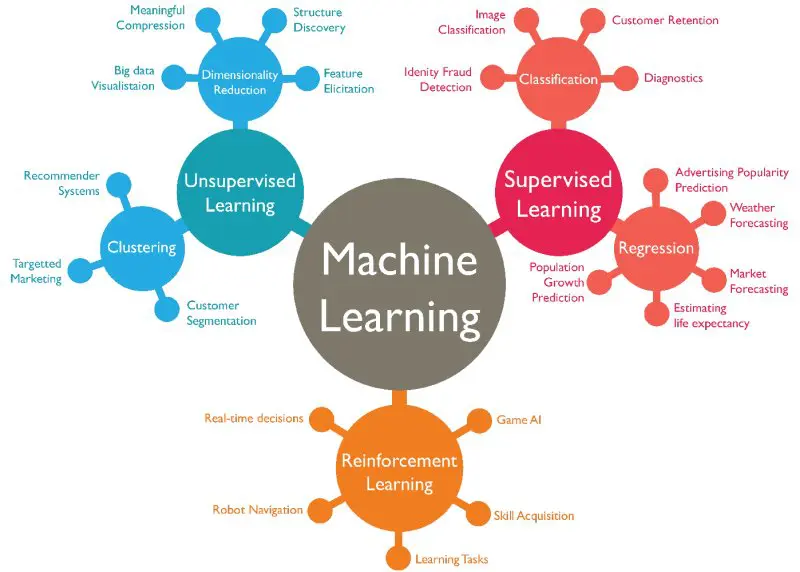
At its core, machine learning is about enabling computers to recognize patterns, make decisions, and predict outcomes based on data rather than relying solely on pre-programmed rules. Unlike traditional software, where developers write every instruction manually, machine learning models are trained using large datasets. These models identify relationships within the data and use this knowledge to perform tasks such as classification, regression, clustering, and anomaly detection. There are three main types of machine learning: supervised learning, where models learn from labeled data; unsupervised learning, where they discover patterns in unlabeled data; and reinforcement learning, where systems learn by interacting with their environment and receiving feedback. The beauty of ML lies in its adaptability. As more data becomes available, the models become more accurate and efficient, constantly refining their performance to better serve users.
Key Features & Highlights
- Personalization at Scale: Machine learning algorithms analyze user behavior, preferences, and past interactions to deliver highly personalized experiences. Streaming platforms like Netflix and Spotify use ML to recommend movies, shows, and songs tailored to individual tastes, increasing user engagement and satisfaction.
- Real-Time Decision Making: ML enables systems to process and analyze vast amounts of data in real time. Credit card companies use ML models to detect fraudulent transactions within seconds, minimizing financial losses and protecting customers from unauthorized activity.
- Natural Language Processing (NLP): Voice assistants such as Siri, Alexa, and Google Assistant rely on NLP to understand and respond to human speech. These systems convert spoken words into text, interpret intent, and provide relevant answers or perform tasks like setting reminders or playing music.
- Predictive Maintenance: In industries like manufacturing and transportation, ML helps predict equipment failures before they occur. By analyzing sensor data and historical patterns, companies can schedule maintenance proactively, reducing downtime and saving costs.
- Enhanced Healthcare Diagnostics: ML is revolutionizing healthcare by assisting in disease diagnosis and treatment planning. Algorithms trained on medical images can detect abnormalities in X-rays or MRIs with accuracy comparable to, or sometimes surpassing, human experts. This speeds up diagnosis and improves patient outcomes.
- Smart Home Automation: Home automation systems like smart thermostats and security cameras use ML to learn residents’ routines and adjust settings automatically. For example, a smart thermostat can lower the temperature when no one is home, saving energy and reducing utility bills.
- Autonomous Vehicles: Self-driving cars rely heavily on ML to interpret sensory data from cameras, lidar, and radar. These systems identify objects, predict their movements, and make split-second driving decisions, paving the way for safer and more efficient transportation.
Frequently Asked Questions / Pros & Cons
What exactly is machine learning, and how does it differ from traditional programming?
Machine learning is a subset of artificial intelligence focused on building systems that learn from data and improve their performance over time. Unlike traditional programming, where developers write explicit instructions for every possible scenario, machine learning models are trained on data and generalize from examples to make predictions or decisions on new, unseen data. Traditional programming relies on predefined rules, while machine learning adapts and evolves based on the data it processes.
Is machine learning only useful for large corporations, or can individuals benefit from it too?
Anyone can benefit from machine learning, whether they are a business owner, a student, or a casual user. Individuals use ML-powered tools every day, such as email spam filters that learn to identify unwanted messages or fitness apps that track activity and provide personalized workout suggestions. Small businesses can leverage ML for customer insights, inventory management, and targeted marketing without needing large-scale infrastructure.
What are the main advantages of using machine learning in daily applications?
- Efficiency: ML automates repetitive tasks, saving time and reducing human error.
- Personalization: It tailors experiences to individual needs, enhancing user satisfaction.
- Scalability: ML systems can process vast amounts of data quickly, making them ideal for large-scale applications.
- Adaptability: As more data becomes available, ML models continuously improve their performance.
- Cost Savings: Predictive maintenance and fraud detection help organizations avoid costly disruptions and losses.
What are the potential drawbacks or challenges of machine learning?
- Data Privacy Concerns: ML systems require large datasets, which may include sensitive personal information. Ensuring data privacy and security is a major challenge.
- Bias in Algorithms: If training data contains biases, the ML model may perpetuate or amplify those biases, leading to unfair outcomes in areas like hiring, lending, or law enforcement.
- High Computational Costs: Training complex ML models often requires significant computational power and energy, which can be expensive and environmentally taxing.
- Lack of Transparency: Some ML models, especially deep learning neural networks, operate as “black boxes,” making it difficult to understand how they arrive at decisions.
- Over-reliance on Data Quality: ML models are only as good as the data they are trained on. Poor or incomplete data can lead to inaccurate predictions and poor performance.
Practical Guidance & Solutions
If you’re looking to harness the power of machine learning in your daily life or business, here are some actionable steps to get started:
For Individuals:
Begin by using ML-powered tools you already interact with, such as virtual assistants, personalized shopping recommendations, or fitness trackers. These tools help you experience firsthand how ML enhances convenience and efficiency. If you have a specific interest, explore ML-driven apps tailored to hobbies or goals, such as language learning apps that adapt to your skill level or budgeting tools that analyze spending habits.
For Small Businesses:
Start by identifying areas where data-driven insights can improve operations. For example, use customer data to segment audiences and create targeted marketing campaigns. Implement chatbots powered by NLP to handle customer inquiries 24/7. Consider using ML tools for inventory forecasting to reduce excess stock and improve supply chain efficiency. Many cloud platforms offer pre-built ML models that require minimal technical expertise to deploy.
For Aspiring Developers:
Learn the basics of programming, statistics, and data science. Platforms like Coursera, edX, and Kaggle offer free or low-cost courses on machine learning fundamentals. Experiment with open-source ML frameworks such as TensorFlow or PyTorch using public datasets. Building small projects, like a chatbot or image classifier, will deepen your understanding and provide practical experience.
Addressing Ethical Concerns:
To mitigate bias in ML models, ensure your training data is diverse and representative of the population you’re serving. Regularly audit algorithms for fairness and transparency. Use explainable AI techniques to make model decisions more interpretable. Advocate for data privacy by minimizing the collection of unnecessary personal information and anonymizing datasets where possible.
Conclusion
Machine learning is no longer confined to research labs or tech giants, it has become an integral part of our everyday experiences, quietly transforming the way we live, work, and interact. From personalized recommendations to life-saving medical diagnostics, ML is unlocking new possibilities and making our world more intuitive, efficient, and connected. While challenges such as data privacy, bias, and computational costs remain, ongoing advancements and ethical practices are paving the way for more responsible and beneficial applications. As we move forward, embracing machine learning with awareness and curiosity will empower us to leverage its full potential, turning the ordinary into the extraordinary and unlocking even greater magic in our daily lives. The future is not just being written by algorithms. It is being shaped by all of us, one data point at a time.