
Quantum Leaps: Decoding the Future with Next-Gen Computing Algorithms
In an era where traditional computing systems are approaching the limits of Moore’s Law, a new frontier is emerging—one where the boundaries of speed, complexity, and problem-solving are being redefined. Next-generation computing algorithms, particularly those rooted in quantum mechanics, are at the heart of this transformation. These algorithms are not just theoretical constructs; they are the building blocks of a technological revolution that promises to unlock solutions to problems once deemed unsolvable. From drug discovery to climate modeling, the applications are vast and transformative. This article explores the evolution of these algorithms, their underlying principles, and the profound impact they are set to have on industries and society.
The Evolution of Computing: From Classical to Quantum
Classical computing, the foundation of modern technology, relies on bits as the smallest unit of data, which can exist in one of two states: 0 or 1. This binary system has powered everything from early computers to today’s supercomputers. However, as demands for processing power grow—especially for complex simulations and large-scale data analysis—classical systems face significant challenges. Enter quantum computing, which leverages the principles of quantum mechanics to transcend the limitations of classical bits.
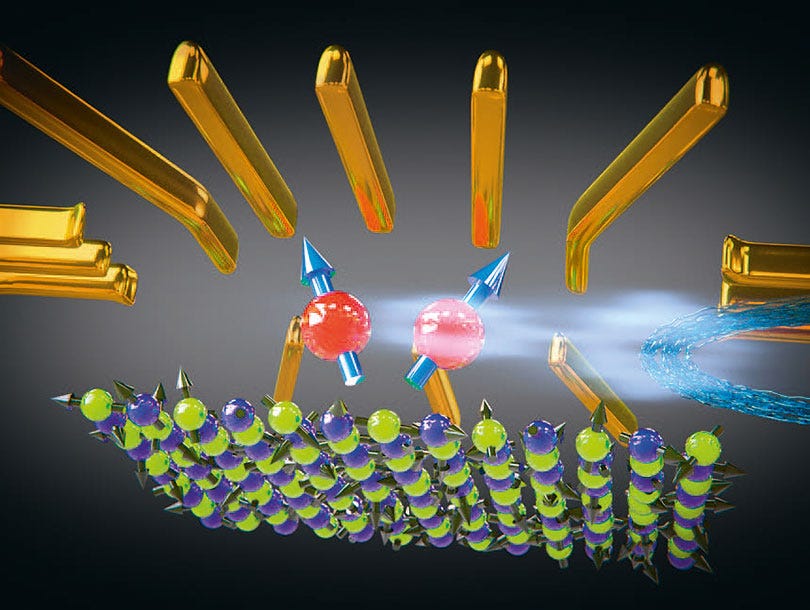
In quantum computing, the fundamental unit is the qubit (quantum bit). Unlike classical bits, qubits can exist in a superposition of states, meaning they can be both 0 and 1 simultaneously. This property, combined with entanglement—a phenomenon where qubits become interconnected and the state of one instantly influences another—enables quantum computers to process vast amounts of information at unprecedented speeds. These characteristics form the bedrock of next-gen algorithms designed to tackle problems that are intractable for classical systems.
Key Algorithms Driving the Quantum Revolution
Several groundbreaking algorithms are at the forefront of quantum computing, each tailored to exploit the unique properties of qubits. Below are some of the most influential:
- Shor’s Algorithm: Developed by mathematician Peter Shor in 1994, this algorithm is designed to factor large integers efficiently. Its most notable application is in breaking widely used encryption schemes like RSA, which rely on the difficulty of factoring large numbers. While this poses security challenges, it also opens doors for quantum-safe cryptography and more secure communication networks.
- Grover’s Algorithm: Proposed by Lov Grover in 1996, this algorithm provides a quadratic speedup for unstructured search problems. In classical computing, searching an unsorted database of N items requires O(N) time. Grover’s algorithm reduces this to O(√N), making it a powerful tool for database searches, optimization problems, and even machine learning tasks.
- Quantum Approximate Optimization Algorithm (QAOA): Developed to address combinatorial optimization problems, QAOA is particularly useful in fields like logistics, finance, and artificial intelligence. It leverages quantum superposition and entanglement to explore multiple solutions simultaneously, providing near-optimal results for complex problems that classical algorithms struggle to solve efficiently.
- Variational Quantum Eigensolver (VQE): This hybrid quantum-classical algorithm is used primarily in quantum chemistry to simulate molecular structures and chemical reactions. By approximating the ground state energy of molecules, VQE accelerates the discovery of new materials and drugs, potentially revolutionizing industries such as pharmaceuticals and materials science.
The Role of Hybrid Algorithms in Bridging the Gap
While fully fault-tolerant quantum computers remain on the horizon, hybrid algorithms are playing a crucial role in bridging the gap between classical and quantum computing. These algorithms combine the strengths of both paradigms, using classical systems to handle tasks that are inefficient for quantum processors and vice versa. For instance, in quantum machine learning, hybrid models can leverage quantum processors for specific computations while relying on classical systems for data preprocessing and post-processing.
One prominent example is the Quantum Kernel Alignment (QKA) algorithm, which enhances classical machine learning models by incorporating quantum computations to improve classification tasks. Similarly, hybrid quantum-classical optimization algorithms are being used in supply chain management to optimize routes and reduce costs. These approaches not only make quantum computing more accessible today but also lay the groundwork for fully quantum-powered solutions in the future.
Real-World Applications and Industry Impact
The potential applications of next-gen computing algorithms extend across a wide range of industries, each poised to benefit from the increased computational power and efficiency they offer.
- Healthcare and Pharmaceuticals: Quantum algorithms are accelerating drug discovery by simulating molecular interactions with high precision. Companies like IBM and Google are collaborating with pharmaceutical giants to identify new drug compounds and understand protein folding, which is critical for developing treatments for diseases such as Alzheimer’s and cancer.
- Finance and Cryptography: In finance, quantum algorithms are being used to optimize portfolios, detect fraud, and improve risk assessment models. Additionally, the looming threat of quantum computing to classical encryption has spurred the development of post-quantum cryptography, ensuring that financial transactions and sensitive data remain secure in the quantum era.
- Climate Modeling and Environmental Science: Climate change presents some of the most complex challenges of our time. Quantum algorithms can process vast datasets and simulate climate systems with unprecedented accuracy, enabling scientists to model the effects of policy decisions, predict extreme weather events, and develop more effective mitigation strategies.
- Artificial Intelligence and Machine Learning: Quantum computing is poised to revolutionize AI by enabling faster training of machine learning models and improving pattern recognition. Quantum-enhanced algorithms can analyze large datasets more efficiently, leading to advancements in fields such as natural language processing, computer vision, and autonomous systems.
- Materials Science and Engineering: By simulating the properties of new materials at the quantum level, researchers can design superconductors, ultra-efficient solar cells, and lightweight alloys for aerospace applications. This could lead to breakthroughs in energy storage, transportation, and construction.
Challenges and Ethical Considerations
Despite the immense promise of next-gen computing algorithms, several challenges must be addressed before their full potential can be realized. One of the most significant hurdles is the issue of quantum decoherence—the loss of quantum information due to environmental interference. Current quantum computers are highly susceptible to noise, which limits their reliability and scalability. Researchers are actively exploring error correction techniques and more stable qubit designs to mitigate these issues.
Another challenge is the accessibility of quantum computing resources. Quantum computers are expensive to build and maintain, and only a handful of organizations, such as IBM, Google, and Rigetti, currently offer cloud-based quantum computing services. This raises concerns about a potential “quantum divide,” where only well-funded entities can leverage the technology, exacerbating existing inequalities in innovation and economic power.
Ethical considerations also come into play. The ability of quantum algorithms to break classical encryption could have far-reaching implications for cybersecurity and privacy. Governments and organizations must proactively develop quantum-resistant encryption standards to safeguard sensitive information. Additionally, the use of quantum computing in surveillance, autonomous weapons, and other dual-use technologies raises questions about accountability and regulation.
The Road Ahead: What to Expect in the Next Decade
The next decade will be pivotal in determining the trajectory of next-gen computing algorithms. Several trends and developments are likely to shape the future of this field:
- Advancements in Qubit Technology: Researchers are exploring various qubit technologies, including superconducting qubits, trapped ions, and topological qubits. Each approach has its advantages and challenges, but breakthroughs in stability and coherence times will be critical for building scalable, fault-tolerant quantum computers.
- Improved Error Correction: Quantum error correction is essential for overcoming decoherence and enabling reliable computations. Innovations in error correction codes and fault-tolerant architectures will be key to advancing the field.
- Integration with Classical Systems: Hybrid algorithms will continue to play a dominant role in the near term, as classical and quantum systems work in tandem to solve complex problems. This integration will democratize access to quantum computing and accelerate its adoption across industries.
- Regulatory and Policy Frameworks: Governments and international bodies will need to establish guidelines for the ethical use of quantum computing. This includes standards for data security, export controls on quantum technologies, and frameworks for responsible innovation.
- Education and Workforce Development: To fully harness the potential of next-gen computing, there will be a growing demand for professionals skilled in quantum algorithms, quantum programming, and quantum hardware. Educational institutions and companies will need to invest in training programs to build a workforce capable of driving the quantum revolution forward.
Conclusion: Embracing the Quantum Future
Next-generation computing algorithms are more than just a technological advancement—they represent a paradigm shift in how we approach problem-solving, innovation, and discovery. From revolutionizing healthcare to securing our digital future, the impact of quantum computing will be felt across every sector of society. While challenges remain, the progress being made is undeniable, and the potential rewards are enormous.
As we stand on the brink of this quantum leap, it is crucial to foster collaboration among researchers, industries, and policymakers. By addressing ethical concerns, investing in education, and promoting equitable access to quantum technologies, we can ensure that the benefits of next-gen computing are shared by all. The future is quantum, and the time to decode it is now.